Showing posts with label Critical Inquest. Show all posts

October 12, 2020

Building a Better Warhammer 40,000 with ProHammer


No comments:

 From gallery of Mezmorki


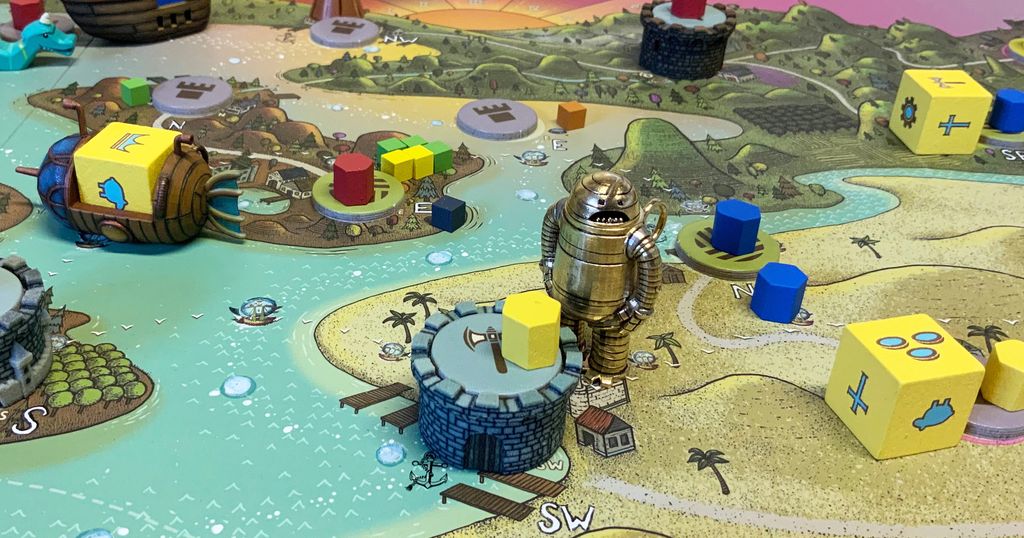
Warhammer 40,000, and Games Workshop by extension, has been a part of my gaming life for as long as I’ve had a gaming life, which is to say nearly all of my actual life. Whether it was stumbling upon Epic at a garage sale, being handed a copy of Rogue Trader (first edition of 40K) by a mysterious uncle in the shadows of darkness, or devising my own grandiose campaign rules, the game has made an impact on my gaming hobbies and interests. Sometimes it’s on the front burner, other times the pot is in the back of the cupboard, nearly forgotten. But it’s always lurking around like a bad habit.


June 1, 2020

Warning, Chaotic Thought Storms Ahead: Wingspan, Awards, and Preference Reflections


No comments:
From gallery of Mezmorki

This post is going to be a bit of an outpouring of thoughts, stream of consciousness style.

This fall will mark 10-years that I’ve been part of the BGG community. But of course my gaming life - both video and tabletop - has gone on much longer than that (since the mid 80’s when I was a young lad). More significantly, this fall will mark 9 years since I started this blog. It’s remarkable because this has been one of the few constants in my “hobby” life. Games come and go, gaming groups come and go, … but this blog is always here. Even if I take long lapses in posting, I know that it’s quickly available when inspiration strikes!

My time on BGG has marked an era of sorts for me and my gaming however. Both the depth of conversation here with many of you all, the collectively hemming and hawing we all do over the games and ratings … and all of it … adds a certain formality to engaging in the hobby. The conversations have helped crystalize my own thinking more, and much of the critical analysis that I’ve seen has in turn inspired my own writings, my gaming preferences, and - more tangibly - my game design work.


April 18, 2020

Board Games Make Better Strategy Games


2 comments:
From gallery of Mezmorki

The title of this essay is a declarative statement. It’s of course open to debate and I’m not suggesting this is an unequivocal rule. But at least in my experience, when I think about the “crux” moments that are the pinnacle of strategic intrigue - where the fate of everything is hanging on the line or where you wait breathlessly to see if your gambit pays off - board games provide both a greater “density” and a greater “diversity” of such moments in comparison to strategy video games.

There are, I believe, a number of factors that contribute to this situation. There are things unique to the design needs and expectations of board games that enable “deep and interesting decisions” to come to the forefront. There are also things, on the video game side of the table, that frequently distract, diminish, or are otherwise at odds with their capacity for deep strategic gameplay. I want to explore both of these dimensions in an effort to tease out, if possible, some poignant ways that strategic video games - especially 4X games - might better capture the strategic depth they aspire to.

Before we get too deep, let’s consider for this article what I mean when I talk about deep, or interesting, or compelling strategic decision points (or the “crux” moments). Principally, I feel these moments exist when: (1) having read and understood the “game state” you are faced with having to decide between mutually exclusive courses of action; (2) these decisions are consequential and have a traceable link to your eventual victory or defeat; and (3) predicting the outcomes of your decisions are laced with enough uncertainty that player skill, experience and heuristics matter for good play (i.e. you can’t just look up an optimal build order and call it a day).

This definition is a lot to unpack. But let’s explore two facets of it.


January 20, 2020

The Curious Case of 4X Games, Efficiency Engines, and Missing Strategic Gambits


4 comments:
I've long been a fan of the 4X genre, while also being frequently critical of it and its many floundering conventions. Despite the renaissance and watershed of renewed interest in the genre, there is a worrying lack of design advancement in my estimation. A recent reddit post and ensuing discussion on r/4xgaming encapsulated nearly all my frustrations with the 4X videogame genre in a single question:
Do you know of any [4X] games that will let you fight back after being beaten down, or have the AI be able to come back after you start to gain an advantage over them?
This seems like such an obvious question to ask, and yet it’s one that apparently few, if any, 4X developers have seriously raised, let alone crafted gameplay mechanisms to answer. What’s fascinating about this question is that, while seemingly simple, it nevertheless strikes at two critical points: (#1) the core of what 4X games are; and (#2) the perennial frustrations players have with unsatisfying late game gameplay.


November 6, 2019

A Beautiful Mess: Frameworks, Sandboxes, and Avant-Garde Designs


No comments:
Warning: This is going to be a meandering post on a topic I’m struggling to wrap my brain around. The intent of my fumbling is to trigger a discussion on the topic at hand, and thus better illuminate the subject and my own understanding. Let’s see if I’m successful.


Over the past few years I’m finding myself increasingly drawn to games that I have affectionately started to describe as “beautiful messes” to my compadres. A game that is a beautiful mess, in my mind, is one that dispenses with some portion of conventional gaming wisdom in order to do something strange, unusual, and often viewed as imperfect - and often results in a very different feeling experience.


September 27, 2019

6 (or 7) Zones of Play & Design Implications


No comments:
I caught a recent Ludology episode, which covered the 6 Zones of Play. For those who haven’t seen or heard of the 6 Zones of Play, it’s a concept framed out by Scott Rogers that breaks down the “physical” board and play space into… wait for it.... 6 zones! A cliffhanger, I know.


September 18, 2019

Shakedown: Tabletop Game Classification and the BGG Database


No comments:
If you haven’t seen the news, BGG has launched a major change to the game database. The mechanisms/mechanics descriptors for game entries has been greatly expanded in alignment with a recently published book on game mechanisms, Building Blocks of Tabletop Game Design (2019) by Geoffrey Engelstein and Isaac Shalev.

The synopsis is that we’ve gone from 51 terms for mechanisms to 186 terms. The new set is, by virtue of the sheer number of them, considerably more detailed. Instead of a singular “worker placement” we now have seven different mechanical nuances defined for worker placement games.


October 9, 2018

The Inglorious State Of 4X Games


3 comments:
NOTE: This article was originally posted at eXplorminate. Head over to eXplorminate to get your fix for 4X and strategy game news, reviews, and more.


Greetings! If you haven’t listened to the 33rd Strategic Expanse – 4th Anniversary Hangout featuring all of the lesser (I’m jesting) eXplorminate staffers then please stop reading this and go listen to that first. The rest of this little rant (thoughtful article?) will make a bit more sense with the proper context. With that out of the way…

I’m elated that, despite my absence on the podcast episode, my name was referenced (usually couched in swear words) a significant number of times. That means you’re all listening to me, which is good because it makes me feel a little less like a crazy person screaming into the wind – and more justified because I’m sure you’ll agree that I’m right. And if you don’t agree now, then maybe you’ll agree to agree with me sometime in the future. Only time will tell.

Alright, alright, enough of the snarkiness.


August 30, 2018

Visualizing the BGG Game Database with Gephi. Whoa!


2 comments:
So I stumbled into an interesting post over at r/boardgames from reddit user Shepperstein, who had downloaded a trove of data from BGG’s database. He then used Gephi to create some fantastic network models (aka graphs) depicting relationships between game categories. Very cool stuff. I urge you to check out his post and links to his analysis.

Of course, I immediately wanted to start playing around with the data myself!

Fortunately, I’m no stranger to excel AND I used Gephi several years ago, so I was already familiar with its basic functionality. Shepperstein also kindly provided a direct link to his database, so I could tap into that information directly. Are we excited yet?


July 18, 2016

This Thing Called Strategy


1 comment:
Geopolitical strategy, circa 1675


For the past few years, a question has been haunting my dreams: What is strategy? A narrower follow up question is: What makes a compelling strategy game?

One reason this question has been bothering me, particularly in terms of 4X or Civilization-style games, is that so often the gameplay does not feel like what strategy is or ought to be, at least for me. If the gameplay isn’t strategy, then what exactly is it? And if I’m not getting what I want out of a strategy game, then what in the heck do I really want?!

I have a number of pet theories floating around these troubling questions, which might help me work towards an answer. Fair warning though, much of this article will be spent in the realm of “pontification” or “theorycrafting.” Back in the old days, we called this “BSing.” You’ve been warned!


July 5, 2016

Ubiquitous Violence


5 comments:

My father passed away recently in a tragic accident - and so I’ve been thinking and reflecting.

My dad was a staunch supporter of non-violence in all aspects of his life. But despite this, while I was growing up he purchased a fair number of violent games upon my request - such as the First-Person Shooter (FPS) game Doom and its many followers and derivatives. At the same time, he always stressed the importance of separating reality from fiction. And while he allowed me to play these games, I knew he found them distasteful and the violence unnecessary - especially when there are so many other wonderful things one might explore instead. He was always looking for a game that emphasized discovery and mystery, or story and problem solving, or journeys and narratives. Anything other than yet more violent action for its own sake.


November 13, 2015

Prepare to be Assimilated: The Roguelike-ification of All Games


No comments:
Note: This article is cross-posted on eXplorminate. If you enjoy this article, please check out eXplorminate's coverage of 4X and strategy games. A gentle reminder that there is also a dedicated site, off-BGG, for Big Game Theory! ~ Cheers!


Karen broke her leg!? Oh snap!!

The world of roguelikes and roguelike-likes (i.e. games with a selection of roguelike elements) is on the rise. In some ways, I wonder whether this is driven by the Nintendo-generation’s (or earlier) nostalgia for games that were f-ing hard. The kind of hard that made you throw the controller across the room. The kind of hard that didn’t have a save feature, let alone autosaves. You know what I mean. These were the games you had to leave paused with the TV off, crossing your fingers that the power light didn’t catch mommy’s eye in the dark of the night, prompting her to shut the thing off and ruin that flawless run. Those were the days; games were brutal and our perseverance was put to the test.


July 30, 2015

The Rise of Boardgame-Like Games and the Platform Paradox


1 comment:


The last year has felt that the various scions of the gaming world are on a collision course. Digital games are increasingly being released cross-platform on desktop, console, and mobile platforms. The boardgame market continues to grow and is spilling over into the mobile market place through digital boardgames at a faster rate. Videogame developers are taking note and designing and marketing games with "boardgame-like qualities".

Yet all of these interaction points, between serious (hardcore) gamers and mobile gaming, between boardgames and mobile games, and between videogame design notions and boardgame-like-ness, are sources of tension. But in every issue there is an opportunity, right? I can't help but forecast a bit into the future and envision an ecosystem of games that evolve at this nexus of gaming pressures: original and cross-platform digital games that embrace "boardgame-like" design principles and appeal to both serious/hardcore gamers as well as a broader segment of the market.

This post will break down these trends and provide some reflection on what I think it could mean. This is all total speculation and reporting based on my observations and discussions with others. Discussion of all forms is encouraged! Let's get on with the show.


April 30, 2015

A Shattered Dream: Critiquing the 4X Genre


4 comments:

I’ve been struggling to write a holistic critique of the 4X genre for a while. On one hand, I ask myself “why is such a critique even necessary?” On the other, I feel that the genre is at a crossroads. Different tensions, for good or for bad, pull the genre in different directions. Trying to understand these tensions, which shape the genre’s landscape, will (hopefully) illuminate more challenges and opportunities in 4X design. Of course, I have my own aspirations of making a 4X videogame, so understanding the current “state of affairs” is important for designing in an informed manner and navigating through this messy environment.

Thankfully, a recent Three Moves Ahead (3MA) podcast on 4X games gave me the needed kick-in-the-pants to get me writing. The 3MA episode, intentionally or not, provided a rather scathing critique of the entire 4X genre and its failings, as well as highlighting a few small bright points of promise. I felt myself doing the proverbial headbang dance as I listened to the podcast, as many of their reactions and sentiments echo my own. Engaging in the 4X genre is a bit of a shattered dream, where we sift through the shards in hope of finding that one perfect game. But so often we cut ourselves on the glass.


November 25, 2014

The Player’s Point of View: Theme and Framing the Experience


No comments:
So a while ago I started a Google spreadsheet file dubbed the “Game Tracker,” wherein I keep list of games that I’m interested in playing in the future. As the list grew and grew; and then grew some more – in concert with my available time shrinking and shrinking; and then shrinking some more – putting the games into an assortment of buckets so that I could prioritize my interest among like-seeming games became important. But hold onto this thought!

Now rewind back two years (give or take) when I was working more actively on the Game Genome Project. If you need a refresher, the Game Genome Project is a BGG guild comprised of various individuals looking to develop a nomenclature and/or classification scheme for boardgames. The basic premise of the project is this:

The Game Genome Project is a comprehensive and collaborative effort to identify the full range of traits (aka genes or characteristics) that can be used to describe board games along with the corresponding tools and practices for assessing and assigning these traits to individual games. The purpose of these activities is to provide the board game community with a more effective and commonly understood lexicon (vocabulary) for discussing board games and support analytical investigation of the boardgaming hobby.

One of the “traits” to investigate relates to the theme of a game, and we quickly arrived at two major distinctions: the theme as it relates to mechanics (level of abstraction vs. fidelity), and the theme itself as a subject and frame of reference for the experience. Theme as it relates to mechanics is a highly fascinating topic, and will be covered in more detail in the future. Till then, and to satiate your burning desires, I’ll direct your attention to this most excellent post by qwertymartin: How do you wear your theme sir?

As for theme as subject and frame of reference, there are a few key dimensions we considered: Scope, Setting, and Subject (yes, I deliberately made them all s-words!). To discuss how these work and apply, I’m going to bring us back to my little “Game Tracker” conundrum and see how these dimensions of defining a game’s theme might be used as a frame for understanding different experiences. Here we go!


November 17, 2014

Culture Storms and the Evolving Medium of Games


No comments:
I’ve been wanting to write something on the culture storm within the video gaming community that’s been brewing and raging over the past many months. On one hand, I’ve stayed relatively silent on the issue because it hasn’t been clear how best I, and this blog, would make a useful contribution to what has become a total quagmire of internet vitriol. On the other hand, my own thoughts are sufficiently confused on the subject that writing about it at least forces me to articulate the thoughts I do have and try to work towards resolution in my own mind. It’s therapeutic on some level.

The culture storm I’m talking about is related to #GamerGate. If you are aware of the controversy, you probably have some of our own opinions and thoughts. If you haven’t heard of it – wikpedia’s GamerGate article appears to provide a fairly detailed account of the issues in play. I’ve taken to calling this a “storm,” as opposed to a war or conflict, because I think it’s far messier than what a war with cleanly divided sides might suggest.

Ultimately though, I don’t want to talk about #GamerGate directly. My feelings, after reading far too much (from both sides), is that trying to sort out the root causes, motivations, and rationales for pro-GG and anti-GG camps is like trying to fight your way through Minos’ Labyrinth. Except instead of facing the Minotaur you face a never-ending stream of photo collages of retrospective twitter posts, the authenticity and context of which is routinely unclear or absent. Its total confusion on both sides of the fence, with the extreme contingents on both sides screaming conspiracy, causing whatever facts or salient points might have been raised in the middle ground to be completely lost. Phew!

So, I’m not talking about #GamerGate. If you are looking for another voice, Erik Kain wrote a nice piece back in September that encapsulates my frustrations with the whole situation rather eloquently. Instead, I want to focus on the issues that have come out of the controversy that ARE important topics to discuss relative to the health and future of gaming culture and industry overall.

You are probably asking “what are these ‘issues’ that we can pull out from the fire and talk about?” I’ll frame each one below, and try my best to frame the different perspectives that come into play on each, and then include some of my own thoughts based on my own experiences and what I’d like to see happen.


June 17, 2014

Schools of Design and Their Core Priorities


6 comments:
One of the regular topics on this blog has to do with the classification of games and the pursuit of a theory or framework that describes the operation and resulting experience of playing board games.

This interest is not driven by the assumption that we'll ever find a perfect system for actually classifying games. Rather, I feel the pursuit of such classification efforts and building a framework for understanding generates interesting discussion, builds knowledge, and creates insights that can be of value on their own.

I've discussed, in an earlier blog post, the idea of trying to define broader categories of games (e.g. What makes a euro a euro?). I want to return to this topic but bring in some other insights and references that I've come across, which will hopefully provide a more tangible and comprehensive picture.

This is a monstrous post ... you have been warned!


September 12, 2013

Game Compulsion Disorder and the Call for Discipline Games


No comments:
This post started as a reply to Patrick Carroll’s recent blog post: Aha! So That's What I'm After!. I’ve been thinking similar thoughts, and after my reply snowballed into over a page of text, I figured I might as well go for it and make it blog post of its own. Here we go…
When playing a video game, a tough situation often comes up for me. I'm playing along and pause to reflect, asking myself "why the heck am I playing this?" What is it I'm getting out of the experience (if anything?).

I recently read an article from Keith Burgun's blog titled an "Anti-Videogame Manifesto" that I think you'll find insightful.


July 24, 2013

What makes a Euro a Euro?


No comments:
Every so often (like every other day it seems) a topic comes up discussing what it is that makes a eurogame a eurogame, and not something else, you know like an Ameritrash game. Or a wargame. The reality is that there will never be a perfectly accurate definition or checklist of traits that makes a game part of one particular group or genre and not another. All the terms are too subjective and mutable, and frankly the discourse continues to evolve at a rapid rate, making it a challenge to pin things down as generalizations.

I’ve been meaning to write this post for a while, in large part as a response to an older article, The Essence of Euro-style Games by Lewis Pulsipher at the Games Journal. His article discussed 13 points, which he felt broadly defined the eurogame. Since the time the article was written, 2006, I feel the list remains only partially valid as the cauldron of eurogames has grown immensely since that time, and in particular the complexity of many euro designs has increased markedly since then.

Really, Pulsipher’s article is more successful at defining a particular slice of the broader euro-game spectrum: the “German family game.” German family games started the whole eurogame phenomena - and many of the underlying tenants of German family game design remain signature aspects of eurogames today. Yet the early German family games were designed to fit a particular social niche (note the word “family” in the label) and breaking out of that context we’ve seen designs evolve in all kinds of directions, particularly in regard to complexity and game length, yet they all share a common ancestry.

So, this post is an attempt to “update” the list of traits that typically make a euro a euro – and not something else. But first, a disclaimer:


July 12, 2013

Critically Effective


No comments:
Samo’s thread, The thrill of (game) bashing., has generated some interesting discussion about the nature of boardgame criticism, an endlessly fascinating topic (to some of us anyway). I wanted to follow up with a few related thoughts of my own, aimed at established and aspiring boardgame critics – but also more generally to everyone, even outside of the context of boardgames.

The subject at hand is two-fold; first how to be an effective (or “constructive”) critic, and second (to a lesser extent) how to “take criticism.”

Professionally, I’m in the architectural/landscape design profession, working both in private practice as well as teaching graduate-level design and planning courses. In my view, the entire field of design (related to but different than purely artistic fields like fine art) is predicated on criticism; or in the verbiage we use “critique.” Criticism provides the mechanism to advance a specific design project and make it successful – as well as advancing the entire design field. It works a little like this: